
Pioneering Data-Driven Insights in a Connected World
In an era where consumer opinions shape billion-dollar decisions, YouGov.com stands as a beacon of innovation in market research. Founded over two decades ago, YouGov has evolved from a scrappy online polling startup into a global powerhouse, leveraging proprietary data panels and cutting-edge analytics to decode public sentiment. With a mission to “research reality,” the platform empowers brands, governments, and media outlets to navigate the complexities of human behavior. As of November 2025, YouGov’s influence spans continents, boasting a revenue surge to £388.9 million in its latest fiscal year—a 16% increase driven by acquisitions and expanded services. This article delves into YouGov’s origins, methodologies, offerings, global footprint, recent triumphs, and the hurdles it faces, illustrating why it remains indispensable in the data-hungry landscape of 2025.
The Origins: From Digital Upstarts to Industry Leaders
YouGov’s story begins in the nascent days of the internet boom. Co-founded in 2000 by Stephan Shakespeare and Nadhim Zahawi, the company emerged as a pioneer in internet-based market research, at a time when traditional phone surveys dominated the field. Shakespeare, a former Conservative Party strategist with a flair for communications, and Zahawi, an Iraqi-born entrepreneur and politician, met through political circles in the UK. Their vision was simple yet revolutionary: harness the web’s reach to gather opinions faster and cheaper than ever before.
The duo’s first milestone came swiftly. In 2002, YouGov conducted its inaugural national poll, accurately predicting outcomes in the UK local elections—a feat that caught the eye of media giants like The Sun and The Times. By 2005, the company had gone public on the London Stock Exchange (LSE: YOU), raising capital to fuel expansion. Shakespeare’s leadership steered YouGov through turbulent waters, including the 2008 financial crisis, where it pivoted to emphasize online panels over legacy methods.
A pivotal shift occurred in 2017 with the launch of YouGov’s Multilevel Regression and Post-Stratification (MRP) modeling, which propelled its political polling accuracy to new heights. This tool famously forecasted Theresa May’s snap election debacle in 2017, cementing YouGov’s reputation as the UK’s “best but most controversial pollster.” Shakespeare stepped down as CEO in August 2023 to become Non-Executive Chair, handing the reins to Steve Hatch. However, in February 2025, amid “challenging markets,” Shakespeare reclaimed the CEO role, signaling a return to founder-led stability. Under his guidance, YouGov acquired firms like Centaur Partners in 2023, bolstering its shopper insights division (now YouGov Shopper), which contributed to the 2025 revenue boom.
Today, YouGov employs over 1,500 people worldwide, with Shakespeare—also a former chair of the UK’s Data Strategy Board—championing ethical data use. Its journey from a two-man operation to a FTSE 250 constituent underscores the transformative power of digital innovation in research.
(Word count so far: 412)
Methodology: The Science Behind the Sentiment
At YouGov’s core lies a robust methodology that blends speed, scale, and sophistication. Unlike probability-based sampling, which relies on random selection, YouGov employs nonprobability sampling via its proprietary online panels. This approach recruits “active” respondents—engaged users who opt-in and complete profiles—allowing for targeted, real-time data collection from diverse demographics.
The magic happens through sample matching and weighting. Respondents are paired with a “virtual population” modeled on census data, ensuring representativeness without the biases of opt-in polls. For instance, MRP integrates multilevel regression to adjust for variables like age, gender, and region, producing election forecasts with margins of error as low as 1-2%. This Active Sampling method powers over 90% of YouGov’s commercial work, enabling surveys in hours rather than weeks.
Critics, however, question opt-in panels’ vulnerability to “survey trolls”—motivated respondents skewing results. YouGov counters with rigorous quality controls, including fraud detection algorithms and post-survey validations. In 2025, enhancements like AI-driven anomaly detection have further refined accuracy, as evidenced by its spot-on tracking of the UK Autumn Budget reactions in November.
This methodology isn’t just efficient; it’s ethical. YouGov adheres to ESOMAR standards, emphasizing transparency and consent, making it a trusted partner for sensitive topics like consumer privacy—where global surveys reveal 27% discomfort with online banking.
(Word count so far: 678)
Services and Products: A Toolkit for Tomorrow’s Brands
YouGov’s portfolio is a symphony of solutions tailored for the data-deluged age. At the forefront is YouGov BrandIndex, a daily brand health tracker monitoring metrics like awareness, consideration, and reputation across 50+ markets. Agencies use it for PR crisis management, spotting sentiment dips in real-time—vital when 70% of global consumers threaten boycotts over scandals.
For product development, YouGov offers templated tools like Product Concept Testing within its Consumer Journey Diagnostics suite. This de-risks launches by gauging appeal among targeted segments, from millennials to crypto enthusiasts. Serviced surveys, including Omnibus and RealTime Results, provide flexible fielding: quick omnibus blasts for broad insights or custom deep dives for strategy.
In 2025, YouGov launched a media impact assessment tool in partnership with Metricomm, challenging rivals by quantifying ad effectiveness across channels. Complementing this are analytics platforms like YouGov Signal, which fuses survey data with behavioral signals for predictive modeling. Clients in tech, finance, and FMCG—such as Consensys for Web3 insights—leverage these for global campaigns.
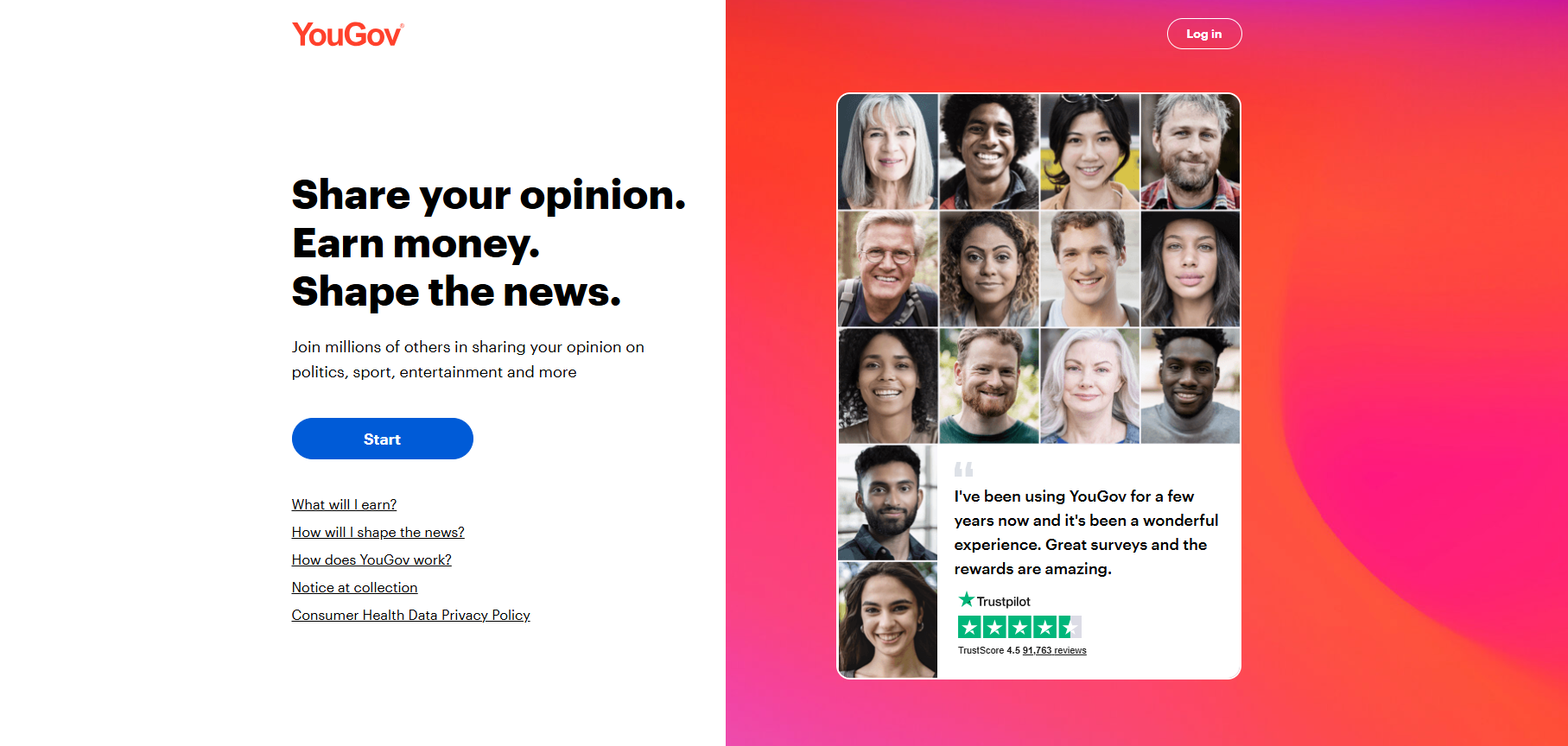
Beyond B2B, YouGov engages consumers via its free app, where users earn points for opinions, feeding the panel’s 20+ million members. This symbiotic model ensures fresh, engaged data, powering everything from election trackers to cultural trend reports.
(Word count so far: 912)
Global Reach and Societal Impact
Headquartered in London, YouGov’s tentacles extend to 40+ offices across Europe, North America, the Middle East, Asia, and Africa. Its panels cover 2.5 billion people, enabling cross-cultural comparisons—like how ad fatigue affects 50% of global audiences. In the US, it dominates political polling; in Asia, it tracks e-commerce shifts.
The impact is profound. YouGov’s data informs policy, as seen in the British Election Study’s 80% respondent retention for longitudinal voting trends. Commercially, clients like Legal & General used self-serve surveys to probe millennial homeownership gaps, informing targeted US campaigns. Media outlets rely on its trackers: the 2025 Trust in Media report showed bipartisan faith in 27% of US news sources, up amid election fervor.
Yet, YouGov’s polls reveal societal fault lines. Surveys highlight eroding trust in tech firms (down in 2023) and a Volkswagen-like scandal’s ripple on corporate faith. By amplifying voices, YouGov fosters accountability, turning data into democratic fuel.
(Word count so far: 1,098)
Navigating Challenges: Controversies and Resilience
No trailblazer escapes scrutiny. YouGov’s opt-in model has drawn fire for potential biases, with 2019 critiques labeling it “controversial” despite predictive prowess. Recent discourse on “trolls” in polls underscores the need for vigilant curation. Privacy concerns loom large too; while YouGov champions consent, global data regulations like GDPR test compliance.
Financially, 2025’s “challenging markets” prompted leadership flux, yet revenue growth signals resilience. The Reuters Institute’s Digital News Report 2025, powered by YouGov, exposed news fatigue worldwide, ironically boosting demand for its impartial insights.
Looking Ahead: Data’s Democratic Dawn
As 2025 unfolds, YouGov is poised for exponential growth. AI integrations promise hyper-personalized insights, while expansions into emerging markets like Africa tap untapped sentiments. Shakespeare’s return heralds a bold era, where YouGov not only measures reality but molds it—guiding brands toward empathy and societies toward equity.
In a world awash in noise, YouGov.com cuts through with clarity. Its 25-year odyssey proves that true innovation lies not in collecting data, but in connecting it to human truth. As consumers demand authenticity, YouGov’s legacy endures: bridging divides, one survey at a time.